



Nebulizer
Established in March 2017 and located in China, Shenzhen Taikang Medical Equipment Co., Ltd. specialized in the R&D, production and sales of medical equipment. We specialize in producing Child Mesh Nebulizer, Treatment Compressor Nebulizer, Medical Device For Adult Kids Nebulizer, Healthy Breathing Compressive Nebulizer, Professional Machine Mesh Nebulizer, and other Nebulizer.
Quickly Efficiency
Our factory operates on highly efficient and streamlined processes, ensuring that our production lines run smoothly and quickly.
Quality Assurance
Our company have CE, FDA, SGS, ISO13485 and other certificates and a large number of design patents.
OEM & ODM Available
We are able to adapt to changing market demands and customize products to meet our customers' specific needs.
Advanced Equipment
We have advanced equipment such as Dielectric strength tester , Ground impedance tester, Oscilloscope Fetal heart simulator, Non-invasive blood pressure simulator, Precision digital pressure gauge, Soldering iron temperature tester to produce better products for you.


In medicine, a nebulizer or nebuliser is a drug delivery device used to administer medication in the form of a mist inhaled into the lungs. Nebulizers are commonly used for the treatment of asthma, cystic fibrosis, COPD and other respiratory diseases or disorders. If you want to know the specifications and prices of Nebulizer, please contact us!
Effective Medication Delivery
Most airborne particles will be filtered out by the anatomy of the airways except for small particles between 1 and 7 µm in diameter. Nebulizer, through the generation of fine aerosol droplets helps deliver the medication to the necessary target organ: your lungs.
If medications are taken orally, it will take time to pass through the gastrointestinal tract to your bloodstream before the body use the active substances where they are needed, while a nebulizer delivers medications very quickly and directly to the respiratory tract. In a report by the American Association for Respiratory Care, Albuterol, a commonly used bronchodilator, begins to work in around five minutes when given in nebulizer form, compared to around 30 minutes when given orally. This means nebulizer therapy is a faster and efficient way to deliver medication into the lungs.
Fewer Side Effects
Increase in efficiency of drug delivery also means that the medication will act faster and at a lower dose which will reduce the incidence of side effects. High levels of drug deposited only in the lung provide active drug to the required tissues only. The dosage of medicine needed in nebulizer therapy is also lesser as compared to medicines given orally.
Hence, nebulizer therapy reduces the risk of side effects compared to oral administration of the same medications. Intake of bronchodilators by nebulizers reduces its systemic side effects such as a headache, tremors or rapid heartbeat. Long-term complications of steroids such as weight gain, high blood pressure, bone loss, high blood glucose or susceptibility to infection will also be reduced through drugs administration by nebulizer.
Easy to use
Nebulizers require very little effort to use. It is a preferred device for children, elderly patients, disabled individuals or those with difficulties in using their hands and taking deep breaths. Unlike inhalers, which generally require certain breathing/hand coordination, you only need to breathe normally during nebulizer therapy. This makes it easier for a caretaker to administer the medication when the patient is unable to do it themselves. Even babies or severely debilitated people can receive medication by nebulizer.
Better Compliance
Without compliance, patients will not benefit from the preventive effect of their medication. The ease of use of nebulizer will motivate patients to comply with their recommended daily administration of drugs. Convenience and ease of use affect patient satisfaction. Patient satisfaction correlated with compliance and better outcomes. Multiple studies showed that patients who were completely satisfied with the handling of their device reported significant adherence to therapy and consequently better outcomes including quality of life.
Prevention
By increasing patient satisfaction with their device and promoting compliance, the preventive aspect of the treatment goals for patients will be achieved. Nebulizer treatments can prevent patients episodes as well as treating. Consequently, the airways will become less sensitive and less likely to be exacerbated by triggers.
Type of Nebulizer
Jet nebulizers make an aerosol out of medications using a compressed gas (like air). These are the most common type of nebulizers.
Ultrasonic nebulizers make an aerosol via high-frequency vibrations. These are more commonly used in hospitals and typically are not for personal use.
Mesh nebulizers use a mesh cap with tiny holes that help dispense medication in a very efficient way. These nebulizers are newer and often more effective than jet nebulizers.
Before starting, gather your supplies:
●Air compressor
●Nebulizer cup
●Mask or mouthpiece
●Medication (either unit dose vials or bottles with measuring devices)
●Compressor tubing
Then, follow these steps:
●Put the air compressor on a flat, sturdy surface. Plug it into a grounded (three-prong) electrical outlet.
●Wash your hands with soap and water, and dry them completely.
●Put medication into the nebulizer cup. Most comes already measured in unit dose vials. If you have to measure it yourself, use a separate clean measuring device for each medication.
●Assemble the nebulizer cup and mask or mouthpiece.
●Connect the tubing to both the aerosol compressor and the nebulizer cup.
●Turn on the compressor to make sure it's working the way it should. You should see a light mist coming from the back of the tube.
●Sit up straight on a comfortable chair. If the treatment is for your child, they can sit on your lap. If you're using a mask, put it on. Be sure it's comfortable and secure. If you're using a mouthpiece, put it between your or your child's teeth and seal the lips around it.
●Take slow, deep breaths. If possible, hold each breath for 2 or 3 seconds before breathing out. This lets the medication settle into your airways.
●Continue until the medication is gone. The nebulizer will make a sputtering noise, and the cup will have just a little liquid left in it.
●If you get dizzy or jittery, stop the treatment and rest for about 5 minutes. Continue the treatment, and try to breathe more slowly. If you keep having problems during treatments, tell your doctor.
Care of Nebulizer
Cleaning and disinfecting your equipment is simple, yet very important. After each treatment, rinse the nebulizer cup with warm water. Shake off excess water and let it air dry.
At the end of each day, the nebulizer cup, mask, or mouthpiece should be washed in warm, soapy water using a mild detergent. Rinse thoroughly, and allow to air dry. Note: There is no need to clean the tubing that connects the nebulizer to the air compressor.
Disinfect your nebulizer once per week or more frequently as directed. After washing your equipment, disinfect the nebulizer with one of the following methods.
Disposable nebulizers should use one of these cold disinfecting methods:
●Soak in 70% isopropyl alcohol for 5 minutes.
●Soak in 3% hydrogen peroxide for 30 minutes.
●Soak in a one-part white vinegar to 3-part water solution for 30 minutes.
●After any of these cold disinfecting techniques, rinse well and air dry.
Non-disposable nebulizers may be disinfected as described above. They may also be disinfected by any of the following heat disinfecting methods:
●Boil for 5 minutes.
●Microwave in a bowl of water for 5 minutes.
●Put in the dishwasher at 158 degrees Fahrenheit for 30 minutes.
●Use an electric steam sterilizer (baby bottle sterilizer).
Medicine Storage
Store all of your medicines in a cool, dry place, and follow the manufacturer's recommendations.
Check your medicines often. Make sure they have not changed color or formed crystals. If you notice any changes in the appearance of your medicines, throw them away.
Compressor Care
●Make sure that your unit is unplugged before you clean it. Keep your air compressor clean by wiping it with a clean damp cloth as needed.
●Do not put the air compressor on the floor during your treatments or while storing.
●Check the air compressor's filter as directed. Replace or clean or clean the filter according to the directions from your equipment supplier.
●Always have an extra nebulizer cup and mask or mouthpiece.
●You can obtain all of the equipment for your nebulizer therapy through your equipment supplier.

Bronchiectasis
For people with bronchiectasis, nebulisers can be used to deliver saltwater solution to help manage mucus build up. It works by helping to reduce the thickness of phlegm so it's easier to cough it out. Nebulisers can also be used to deliver antibiotics if you have a bacterial infection.
Cystic Fibrosis
Nebulisers are used to deliver medications to manage the build-up of mucus and other symptoms if you have cystic fibrosis.
Chronic Obstructive Pulmonary Disease (COPD)
For people with COPD, there is no evidence that nebulisers are more effective at delivering drugs than handheld inhalers as part of your usual treatment. But you may use a nebuliser in hospital for a short time if you have a severe flare-up. Your consultant may decide to arrange a nebuliser for you to use at home in some circumstances.
Asthma
If you have asthma, atomizers are still essential, and maybe need have a nebulizer ready anytime and anywhere.
Pulmonary Fibrosis
For people with pulmonary fibrosis, including idiopathic pulmonary fibrosis (IPF), saltwater solution can be used to help manage mucus build-up.
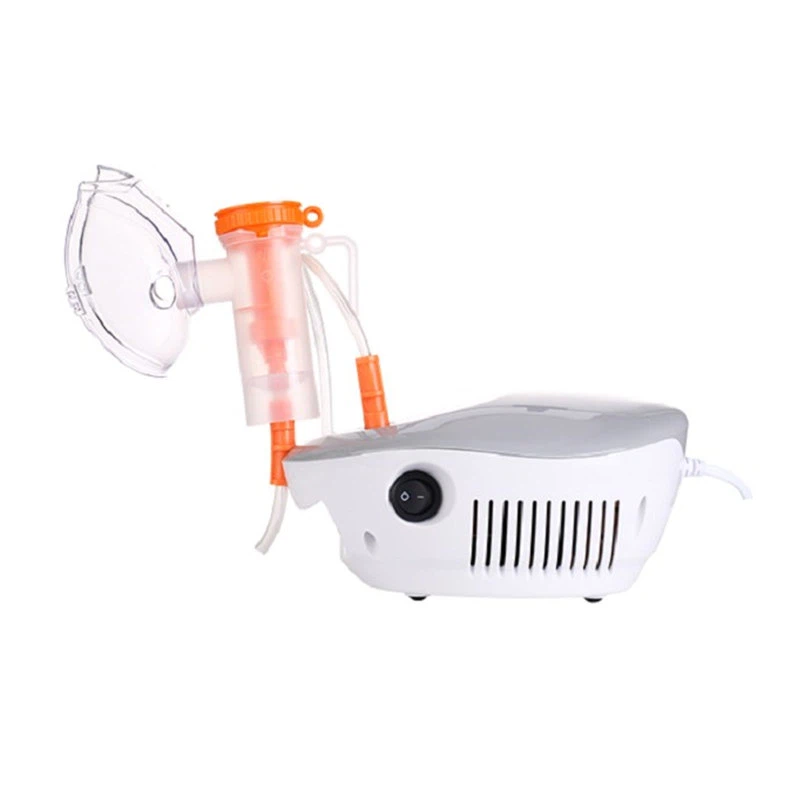
Component of Nebulizer
The compressor is the part that fuels the working of the nebuliser system. It is a device that pumps the ambient/outside air forcefully through the nozzle that is attached to the tubing. The compressor is connected to a power source.
The tubing delivers the pressurised air from the compressor to the medication cup, thereby enabling conversion of the liquid medicine into an aerosol or mist form.
Medication cup
This is the unit into which the liquid medicine is poured. In this cup, the liquid medicine is converted into aerosol or mist by the pressurised air pumped by the compressor through the tubing.
The face mask or the mouthpiece is the part that is used by the patient and through which the medicine mist can be inhaled. If a face mask is used, ensure that it fits tightly without any gaps. In the case of a mouthpiece, ensure that the mouthpiece is held firmly between the teeth with the lips covering it completely.
Nebuliser filters are an important part of the nebuliser system. Nebulisers compress and pump the ambient air or oxygen, which helps convert the liquid medicine into an aerosolised medication. This air, before entering the medication cup, passes through the filter, which helps to remove particulate particles in the compressed air. The filter should be checked regularly and replaced when needed.
Certifications


Frequently Asked Questions
Q: What exactly does a nebulizer do?
Q: Is Nebulizing good for your lungs?
Q: Do I need a prescription for a nebulizer?
Q: Is it OK to use a nebulizer with just water?
Q: Does nebulizer stop coughing?
Q: What not to do after nebulizing?
Q: Which is safer nebulizer or inhaler?
Q: What medicine do you put in a nebulizer?
Q: Why do I cough more after nebulizer treatment?
Q: What happens if you don t rinse your mouth after using nebulizer?
Q: Can we put Vicks in nebulizer?
Q: Does nebulizer get rid of phlegm?
Q: Does nebulizer get rid of phlegm?
Q: Can you cough too much after a nebulizer?
Q: Will a nebulizer break up chest congestion?
Q: Why do I feel worse after nebulizer?
Q: Is nebulizer better than cough syrup?
Q: Can you overdo nebulizer?
As one of the most professional nebulizer manufacturers and suppliers in China, we're featured by quality products and low price. Please rest assured to wholesale cheap nebulizer for sale here from our factory. Contact us for quotation.