



Compressive Nebulizer
Established in March 2017 and located in China, Shenzhen Taikang Medical Equipment Co., Ltd. specialized in the R&D, production and sales of medical equipment. We specialize in producing Child Mesh Nebulizer, Treatment Compressor Nebulizer, Medical Device For Adult Kids Nebulizer, Healthy Breathing Compressive Nebulizer, and other Compressive Nebulizer.
Quickly Efficiency
Our factory operates on highly efficient and streamlined processes, ensuring that our production lines run smoothly and quickly.
Quality Assurance
Our company have CE, FDA, SGS, ISO13485 and other certificates and a large number of design patents.
OEM & ODM Available
We are able to adapt to changing market demands and customize products to meet our customers' specific needs.
Advanced Equipment
We have advanced equipment such as Dielectric strength tester , Ground impedance tester, Oscilloscope Fetal heart simulator, Non-invasive blood pressure simulator, Precision digital pressure gauge, Soldering iron temperature tester to produce better products for you.


Nebulizers can be used to deliver many types of medicines. The medicines and moisture help control breathing problems like wheezing and help loosen lung secretions. A nebulizer might be used instead of other inhalers. A nebulizer is powered by an air compressor that plugs into an electrical outlet. If you want to know the specifications and prices of Compressive Nebulizer, please contact us!
When inhaling from a nebulizer, there's no need to breathe in forcefully or use your hands and there are no special techniques required at all—you simply breathe as normal. This is particularly beneficial for young children, the elderly and people with limited hand mobility.
In comparison, inhalers require a quick and forceful inhalation technique, as well as coordinated pressing down on the inhaler to release the medication. This method can be tricky for some patients to master, often leading to ineffective treatment. In fact, according to a study by the University of Chicago, researchers found that 97% of the children studied misused their inhaler. In addition, there are also certain medications such as metaproterenol and acetylcysteine that can only be delivered by a nebulizer, and not by an inhaler.
Using a nebulizer is as easy as breathing. All you need to do is find a comfortable place to sit, measure your medication and place it into your nebulizer unit and begin your treatment by breathing in and out—it's as simple as that.
Albuterol, the most common bronchodilator used to treat inflammation in the airways, starts working approximately five minutes after you begin your nebulizer treatment. However, if you were to take the same medicine orally, it would take around 30 minutes for it to begin working. This is because medications that are taken orally have to be broken down by the digestive system first before they enter the bloodstream and circulate to where they need to be. In contrast, medications that are inhaled via a nebulizer bypass the digestive system and head immediately to the source of inflammation — providing much faster relief.
If you're having an asthma attack or having trouble breathing, just a few minutes can feel like an eternity, which is why delivering respiratory medicines via a nebulizer can give you peace of mind much more quickly. Also, using a nebulizer can ensure that your medication gets where it needs to be—your lungs and the source of inflammation—rather than being wasted at the back of your throat.
Nebulizers are no longer big, bulky units that are a nuisance to use. Modern nebulizers, such as our company's compact-portable nebulizer, are small enough to fit into the palm of your hand, enabling you to take your treatment with you wherever you go. Whether you're heading to the office, or working out at the gym, you can use your nebulizer discreetly whenever you need it.
What is the Difference Between a Compressor Nebulizer and a Mesh Nebulizer?
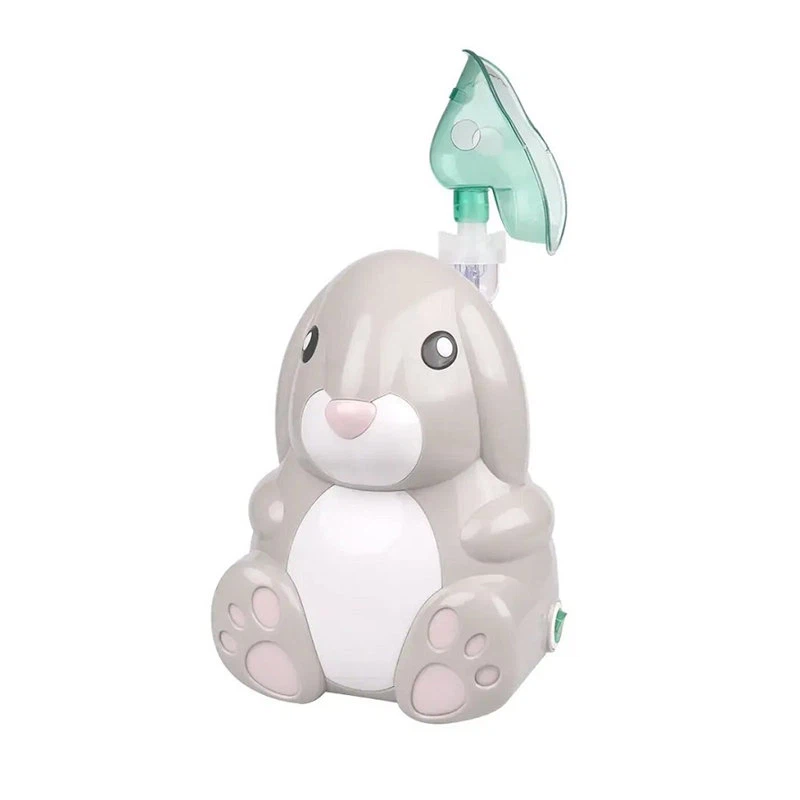
Compressor Nebulizers
This type of nebulizer is larger and more cumbersome than a mesh nebulizer, but it is also more durable and may be a better option for individuals who need to use the device for longer periods of time.
Advantages
Large medication capacity: This type of nebulizer is often equipped with a large medication cup, making it a good option for individuals who need to take multiple doses of medication.
Durable design: The larger size and durable design of a compressor nebulizer make it a good option for individuals who need to use the device for longer periods of time.
Disadvantages
Regular maintenance required: The use of an air compressor and the larger design of a compressor nebulizer may require regular cleaning and maintenance to ensure it is functioning properly.
Mesh Nebulizers
This type of nebulizer is compact and portable, making it easy to use on the go. It is also known for its quick and efficient delivery of medication, which is ideal for acute respiratory conditions.
Advantages
Compact and portable design: The compact design of a mesh nebulizer makes it easy to store and transport, making it a good option for individuals who are always on the go.
Low maintenance: Mesh nebulizers are low maintenance devices as they require just regular cleaning.
Disadvantages
Potential for clogging: The mesh technology used by mesh nebulizers may become clogged over time, or due to improper use reducing its effectiveness and requiring replacement of the mesh.
How Do I Care for My Compressive Nebulizer?
It's important to clean and disinfect your asthma nebulizer equipment to prevent infection. Clean it in an area away from smoke, dust, and open windows.
Follow these instructions for cleaning your nebulizer:
●After each treatment, rinse the nebulizer cup thoroughly with warm water, shake off excess water, and let it air-dry. At the end of each day, wash the cup and mask or mouthpiece in warm water with a mild detergent. Rinse it thoroughly and let it air-dry. You don't need to clean the compressor tubing.
●Every third day, after washing your equipment, disinfect it with either a vinegar/water solution or a disinfectant solution. To make the vinegar solution, mix ½ cup of white vinegar with 1½ cups of water. Soak the equipment for 20 minutes and rinse it well under a steady stream of water. Shake off the excess water and let it air-dry on a paper towel. Be sure it's totally dry before storing it in a zippered plastic bag.
Storing
●Cover the compressor with a clean cloth when you're not using it. Wipe it with a clean, damp cloth if necessary.
●Don't put the air compressor on the floor, either for treatments or for storage.
●Store medications in a cool, dry place. Some need to be kept in a refrigerator, and others should be kept out of the light. Check them often. If they've changed color or formed crystals, throw them out and replace them.
Other tips
●Always have an extra nebulizer cup and mask or mouthpiece on hand. If you get a breathing treatment in your doctor's office, ask for the tubing, cup, and mask.
●Follow the equipment directions on checking, cleaning, and replacing the filter on the air compressor.
How to Use Compressive Nebulizer
Insert Medication
Open the cap, Fill the cap with medication as prescribed by your physician. But sure that the medication does not exceed the liquid site line 6ml (6cc), Close the cap.
Operate Nebulizer
Plug the air compressor, but do not connect the nebulizer. Make sure that the air filter is attached to air compressor. Turn on the power switch. After the air compressor runs properly for 1-2 minutes, connect net outlet of air compressor to the inlet of the Nebulizer by air hose. Begin treatment according to your physician's instruction. Inhale and exhale naturally. Be sure to stop when the medication is completed. When you have completed. Use, turn the air compressor unit off before you disconnect the air hose. WARNING: Do not use near flammable objects or location near explosive materials.
After Using the Nebulizer
Wash the Nebulizer with running water or soak in warm water for 15 minutes. For a more thorough, hygienic cleaning, add some vinegar in the water. Note: Do not boil the Nebulizer, doing so could damage it. Dry the Nebulizer completely before storing it.
Replace Air Filter
Generally, the air filter should be replaced every three month or after 300 uses, to replace the air filter, Remove the Filter cover, Replace the filter, Replace the filter cover. Note: Whenever the filter become wet, allow it to dry completely before using.
Product Cautions
To avoid electrical shock: Keep the unit away from water. Do not immerse the power cord the unit in liquid. Do not use while bathing. Do not reach for a unit that has fallen into water immediately unplug the unit.
Never operate the unit if it has any damaged parts (including power cord), if it has been dropped or submersed in water. Promptly send it to a service center for examination and repair.
The unit should not be used where flammable gas, oxygen or aerosol spray are being used.
Disconnect the unit from the electrical outlet before cleaning.
Do not use other attachments unless recommended by manufacturer.
Operation Cautions
Connect this product to an appropriate voltage outlet for your model.
Do not run this product unattended.
Never operate if this unit has a damaged cord or plug, if it has been dropped or in any way into water, if it does not work properly. Return it to a service center for repair.
If any abnormality occurs, discontinue use immediately until the unit has been examined and repaired.
Always unplug the product immediately after use.
Never block the air openings of the main unit or place it where the air openings may be obstructed.
Storage Cautions
Do not store the unit under direct sunlight, High temperature or humidity.
Keep the unit out of reach of small children.
Cleaning Cautions
Do not immerse the unit in water. It may damage the unit.
Disconnect the unit from the electrical outlet before cleaning.
Clean all necessary parts after each use as instructed in Manual.
Certifications


Frequently Asked Questions
Q: How does a compressed nebulizer work?
Q: Does compressed nebulizer stop coughing?
Q: What are the side effects of a compressor nebulizer?
Q: Is it OK to use a compressor nebulizer everyday?
Q: Does compressor nebulizer remove mucus from lungs?
Q: What not to do after nebulizing?
Q: How many times nebulizer can be used in a day?
Q: How long is a nebulizer compressor good for?
Q: How much does a compressor nebulizer cost?
Q: When should I stop using nebulizer?
Q: Is nebulizer better than cough syrup?
Q: Is nebulizer better than antibiotics?
Q: Is nebulizer better than antibiotics?
Q: Which is better nebulizer or steam?
Q: Can I use nebulizer while sleeping?
Q: Does nebulizer need to be refrigerated?
Q: Should nebulizer solution be refrigerated?
Q: Are nebulizers worth it?
As one of the most professional compressive nebulizer manufacturers and suppliers in China, we're featured by quality products and low price. Please rest assured to wholesale cheap compressive nebulizer for sale here from our factory. Contact us for quotation.